
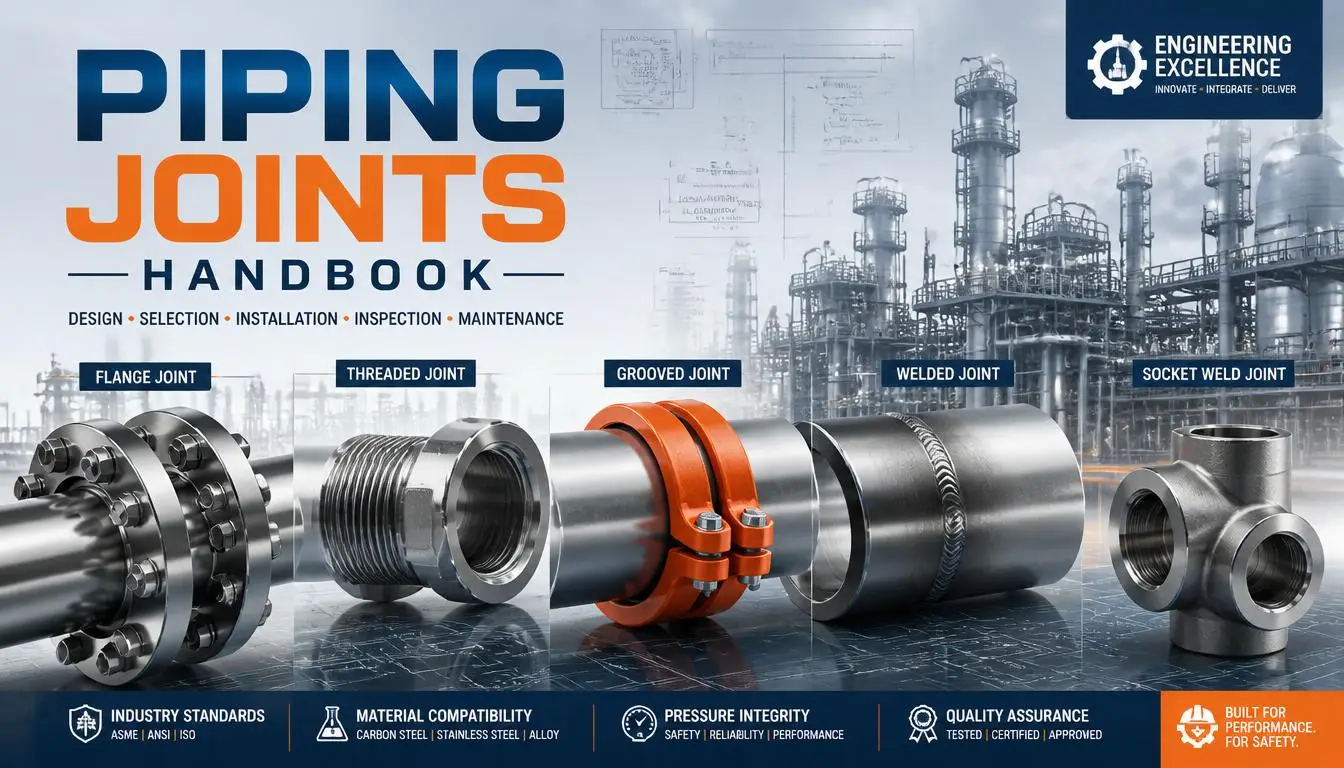
Piping joints form the critical connections in industrial piping systems across oil and gas, power generation, chemical processing, HVAC, water supply, and manufacturing sectors. While pipes transport fluids, the joints ensure system integrity by linking sections, accommodating movement, enabling maintenance, and preventing leaks under demanding conditions. This piping joints handbook provides a comprehensive overview of common joint types, their applications, advantages, limitations, and best practices for selection and installation.
What Are Piping Joints?
Piping joints serve as mechanical or welded connections between pipes, valves, fittings, or equipment. Proper selection directly impacts the performance, safety, and longevity of the entire pipe network. Engineers must evaluate factors such as operating pressure, temperature, fluid characteristics, vibration levels, and access needs for maintenance when specifying joints.
Permanent joints, like welded connections, deliver maximum strength and leak resistance but resist disassembly. Detachable joints, such as flanged or threaded options, allow easier inspection and replacement. Understanding these distinctions helps teams match joints to specific system requirements.
Common Types of Piping Joints in Industrial Systems
Welded Joints
Welded joints create strong, permanent bonds through fusion of pipe ends. Subtypes include butt-welded, socket-welded, and fillet-welded joints. These excel in high-pressure and high-temperature settings, such as oil and gas pipelines, power plant steam lines, and chemical processing systems. Their seamless nature minimizes leak paths and supports excellent flow characteristics.
Flanged Joints
Flanged joints consist of two bolted flanges with a gasket between them. They appear frequently at pump and valve connections, equipment nozzles, and locations requiring periodic disassembly. The design supports larger pipe diameters and simplifies alignment during installation.
Threaded (Screwed) Joints
Threaded joints rely on male and female threads for connection. They suit low-pressure applications like water supply lines, instrument air systems, and utility services. No welding is needed, which speeds installation in smaller pipe sizes.
Socket Joints
Socket joints involve inserting one pipe into a recessed fitting, often sealed with rubber rings or solvent cement. These are popular in plastic and cast iron systems for water distribution, drainage, and sewer lines.
Expansion Joints
Expansion joints absorb thermal expansion, contraction, vibration, and misalignment. They protect piping from stress in steam lines, heat exchangers, and long pipeline runs. Designs range from metallic bellows to elastomeric or fabric types depending on conditions.
Pros and Cons of Major Piping Joint Types
| Joint Type | Key Advantages | Main Limitations | Best Applications |
|---|---|---|---|
| Welded | High strength, leak-proof, durable under extreme pressure/temperature | Difficult to disassemble, requires skilled labor and inspection | High-pressure oil & gas, power plants |
| Flanged | Easy assembly/disassembly, good for maintenance | Bulkier, potential gasket failure, higher cost | Pumps, valves, frequent access points |
| Threaded | Simple installation, no welding needed | Limited to low pressure/vibration, leak risk over time | Low-pressure utilities, small diameters |
| Socket | Quick install, allows some movement | Lower pressure rating, not for high temps | Water/sewer, plastic piping systems |
| Expansion | Absorbs movement and vibration, reduces stress | Higher initial cost, needs regular checks | Steam lines, long pipelines |
Factors to Consider When Choosing Piping Joints
Selection involves multiple engineering variables. Operating pressure and temperature often dictate permanent versus detachable options, with welded or flanged joints preferred for severe service. Fluid type matters significantly—corrosive or hazardous media demand highly compatible, leak-tight materials.
Maintenance requirements favor flanged or grooved joints where frequent inspection is necessary. Pipe material compatibility is essential to avoid galvanic corrosion or degradation. Thermal expansion, vibration, and installation environment further influence choices, with expansion joints or flexible connections addressing movement issues.
Materials for Piping Joints and Compatibility
Joint materials must withstand the same conditions as the piping system. Carbon steel offers cost-effective strength for many applications, while stainless steel provides superior corrosion resistance. Plastics suit lower-pressure, non-corrosive services. Always verify compatibility charts and standards from organizations like ASME for critical systems.
Common Pipe Joint Failures and Prevention Strategies
Joint failures often manifest as leaks, cracks, gasket degradation, or corrosion, leading to downtime and safety risks. Causes include improper selection, poor installation, inadequate support, or exceeding design limits.
Prevention starts with correct joint selection based on full operating parameters. Follow manufacturer installation procedures precisely, using proper torque sequences for bolted joints and qualified welders for welded connections. High-quality gaskets and seals, combined with regular inspections and maintenance programs, extend service life.
Comparison of Failure Risks Across Joint Types
| Joint Type | Common Failure Modes | Prevention Focus |
|---|---|---|
| Welded | Cracks, incomplete fusion | Qualified welding, NDT inspection |
| Flanged | Gasket blowout, bolt loosening | Proper torque, gasket selection |
| Threaded | Thread galling, leaks over time | Sealants, vibration-resistant designs |
| Expansion | Fatigue, over-extension | Correct sizing, alignment checks |
Best Practices for Installation and Maintenance
Successful piping systems depend on quality installation. Align components accurately to avoid stress. Use appropriate tools and follow torque specifications for flanged joints. For welded joints, ensure bevel preparation and post-weld heat treatment where required. Conduct pressure testing after installation to verify integrity.
Ongoing maintenance includes visual inspections, leak detection, and replacement of worn components. In high-reliability environments, predictive maintenance techniques using vibration analysis or thermography prove valuable.
At Vherix & Mechstera, our LinkedIn community shares practical field experiences and engineering updates on piping systems, helping professionals stay current with industry advancements.
Piping Joints Handbook
Why Proper Piping Joint Selection Matters for Efficiency
Well-chosen and correctly installed joints minimize leaks, reduce maintenance costs, and enhance overall system reliability. They prevent costly shutdowns and support compliance with safety regulations. Whether designing new facilities or maintaining existing ones, a solid understanding of piping joints handbook principles empowers better decisions.
This guide covers foundational knowledge while encouraging consultation with specialists for complex projects. For further reading on expansion joints, explore this detailed technical handbook from the Fluid Sealing Association.









2 thoughts on “Piping Joints Handbook: Types and Selection Guide”