
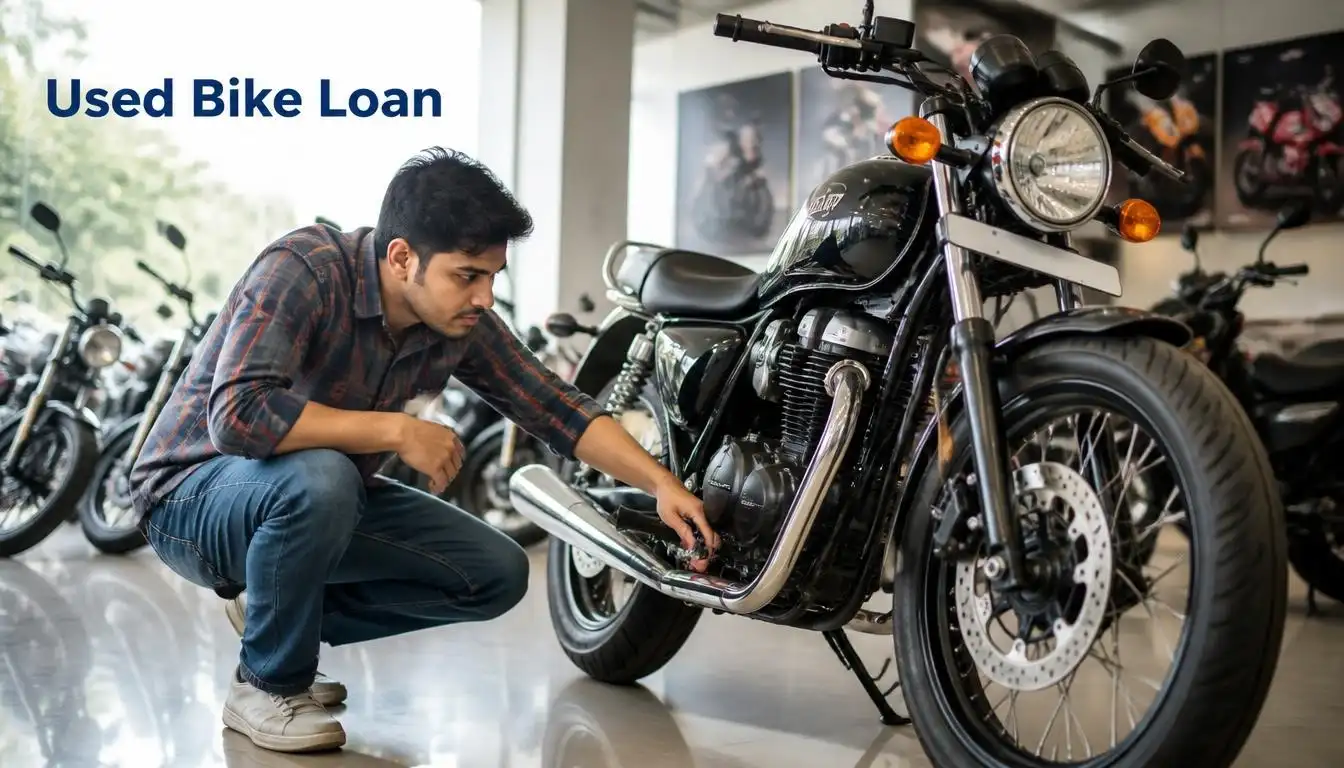
A used bike can be a good way to get a two-wheeler without paying for a new one. It can also become expensive if the bike has hidden problems or the loan terms are unclear. A used bike loan works like a new bike loan in many ways, but lenders treat it more carefully because the bike is older and its value is less certain.
How a Used Bike Loan Differs From a New Bike Loan
The main difference is risk. A new bike has a known price, a warranty, and a fairly predictable resale value. A used bike does not. Its value depends on age, model, condition, kilometres run, service history, and demand in the second-hand market.
Lenders therefore usually offer a smaller loan for a used bike, and often a shorter tenure. A new bike loan may run for three to five years, while a used bike loan is often limited to one to three years.
Interest rates are also generally higher for used bikes, because the lender takes more risk on an older asset. The final rate depends on your credit profile, income, the bike’s age, and the lender’s assessment.
Valuation also differs. For a new bike, the loan is based on the on-road price. For a used bike, the lender checks current market value first. If the seller asks for more than that value, you must pay the difference yourself.
Who Can Apply
Most lenders look at age, income, credit history, and the bike itself.
Applicants usually need to be at least 18, and many lenders prefer 21 or older. There may also be a maximum age when the loan ends.
Lenders want proof that you can pay the instalment comfortably. Salaried applicants are usually asked for income proof. Self-employed applicants may need to show business income and bank statements. Stable work history helps.
A good CIBIL score shows timely repayment of earlier loans or cards. A low score does not always mean rejection, but it can mean a higher rate, a smaller loan, or a request for a co-applicant.
The bike must also qualify. Many lenders set a maximum age, often around five to eight years. Very old bikes, badly damaged bikes, or bikes without clear papers are often not accepted.
Documents Usually Required
Keep these ready before you apply: identity and address proof such as Aadhaar, PAN, passport, voter ID, or driving licence; PAN in most cases; and income proof.
Salaried applicants are usually asked for recent salary slips and bank statements. Self-employed applicants may be asked for tax returns, bank statements, and business proof.
For the bike, lenders usually ask for the Registration Certificate (RC), insurance papers, and the sale agreement or quotation from the seller. They want to confirm the seller legally owns the bike and that no loan is pending on it. Some lenders may also ask for bike photographs or a valuation report.
Interest Rates in General Terms
Rates for used bike loans are generally higher than for new bike loans, but the exact rate varies. Do not assume another person’s rate will apply to you.
Credit score is a major factor: a higher score usually means a lower rate. Income, job stability, existing loans, and tenure also matter. A two-year-old bike in good condition is less risky than a seven-year-old bike with high mileage, so it may get a better rate.
Compare more than the rate. Check processing fees, prepayment charges, late payment charges, and total repayment. A loan with a slightly lower rate but high fees may cost more overall. Use a loan calculator to test different rates and tenures, and treat any example rate as illustrative only.
Loan-to-Value and Down Payment
Loan-to-value, or LTV, is the share of the bike’s value a lender will finance. It is usually lower for used bikes than for new bikes.
For example, if a bike is valued at Rs. 60,000 and the lender offers 70% LTV, the maximum loan is Rs. 42,000. You must pay the remaining Rs. 18,000 as a down payment, plus any extra if the seller’s price is above the valuation.
A higher down payment lowers your loan, instalment, and total interest, and it reduces the lender’s risk. Do not empty your savings for it, though. Keep an emergency fund and budget for insurance, servicing, fuel, and possible repairs.
Things to Check on the Bike
The bike is the security for the loan. If it has problems, you must still repay the loan, so check it carefully.
Check age and model against the RC, and confirm the seller’s name matches it. Ask about any pending loan or legal issue. Do not buy a bike with unclear ownership.
Check condition: look for rust, oil leaks, damaged parts, and worn tyres. Start the bike, listen for unusual sounds, and test brakes, lights, indicators, horn, and suspension. Take a test ride if possible.
Check kilometres run and service history. Very low kilometres on a very old bike can be a warning sign, as can very high kilometres. A bike with regular servicing and valid insurance is usually safer. Check whether the insurance is comprehensive or third-party only, and when it expires. A local mechanic can also give a rough idea of fair price.
Common Mistakes to Avoid
Do not borrow the maximum amount without checking total cost. A longer tenure lowers the monthly instalment but raises total interest. A shorter tenure is harder each month but cheaper overall.
Do not ignore the bike’s age. A loan for a very old bike may continue after the bike is no longer reliable, leaving you paying for repairs and the loan together.
Do not skip the paperwork check. A delayed or incomplete RC transfer can cause problems later. Finally, do not accept the first offer. Compare rates, fees, loan amount, tenure, and prepayment terms from at least two or three lenders.
FAQs
Can I get a loan for a bike over five years old?
It depends on the lender. Some accept bikes up to a set age; others do not. Older bikes usually get a smaller loan, shorter tenure, and higher rate.
Do I need a good CIBIL score?
A good score helps approval and may improve the rate. A low score does not always mean rejection, but you may face a higher rate or need a co-applicant.
Is the loan based on the seller’s price or the bike’s value?
Usually on the lender’s valuation. If the asking price is higher, you must pay the difference.
Can I prepay a used bike loan?
Many lenders allow it, but some charge a fee. Check the terms first, as prepaying can reduce total interest.
What if the bike is damaged after I take the loan?
You must still repay it. Valid insurance is therefore important; check what it covers before riding regularly.
Conclusion
A used bike loan can make a second-hand bike affordable, but only if the bike is in good condition and the terms are clear. Check eligibility, keep documents ready, compare lenders, and inspect the bike before borrowing. Focus on total cost, not only the monthly instalment. A fair price, a reasonable loan, a clear RC, and valid insurance matter as much as the rate.
Disclaimer: This article is for educational and informational purposes only. It is not financial advice. Loan eligibility, interest rates, and terms vary by lender and change over time. Please check current terms directly with your lender before making a decision.









